
Last updated November 22, 2026
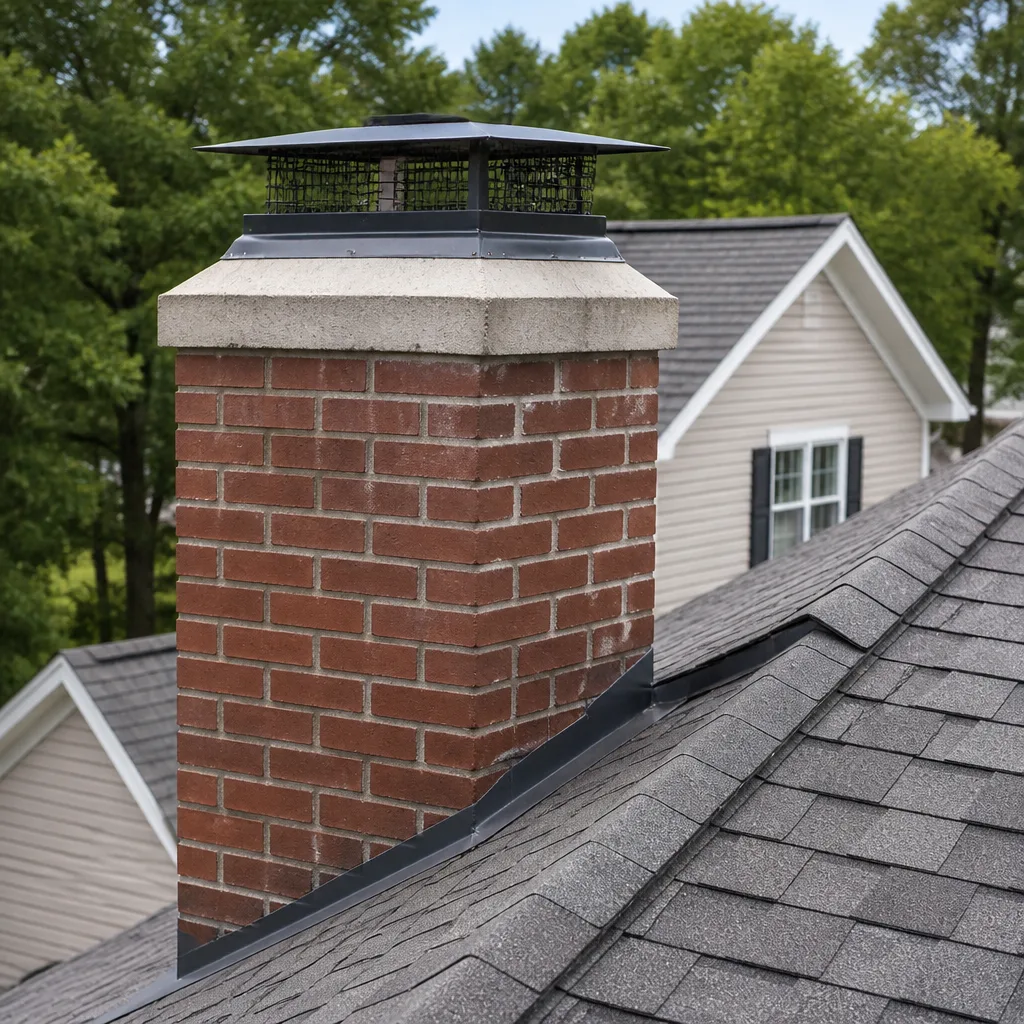 Sweep & inspection
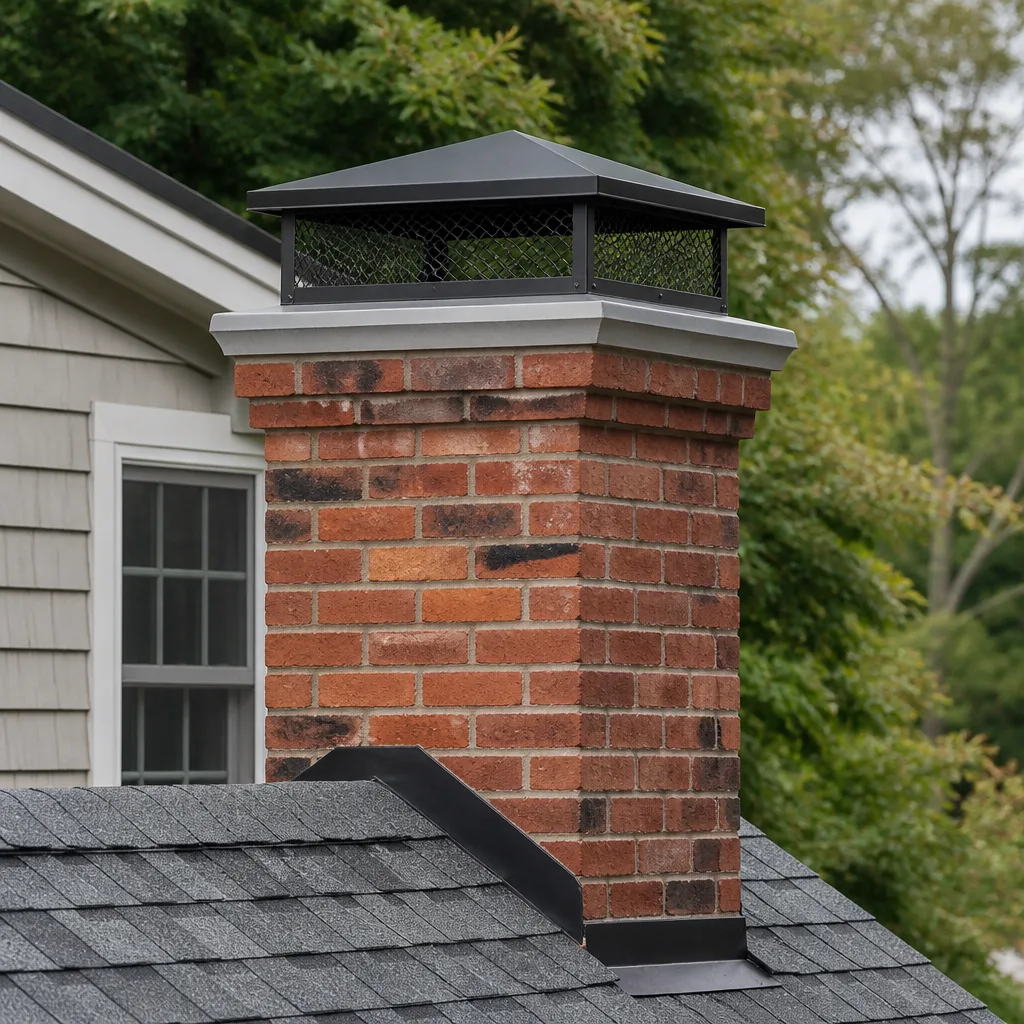 Caps & crowns
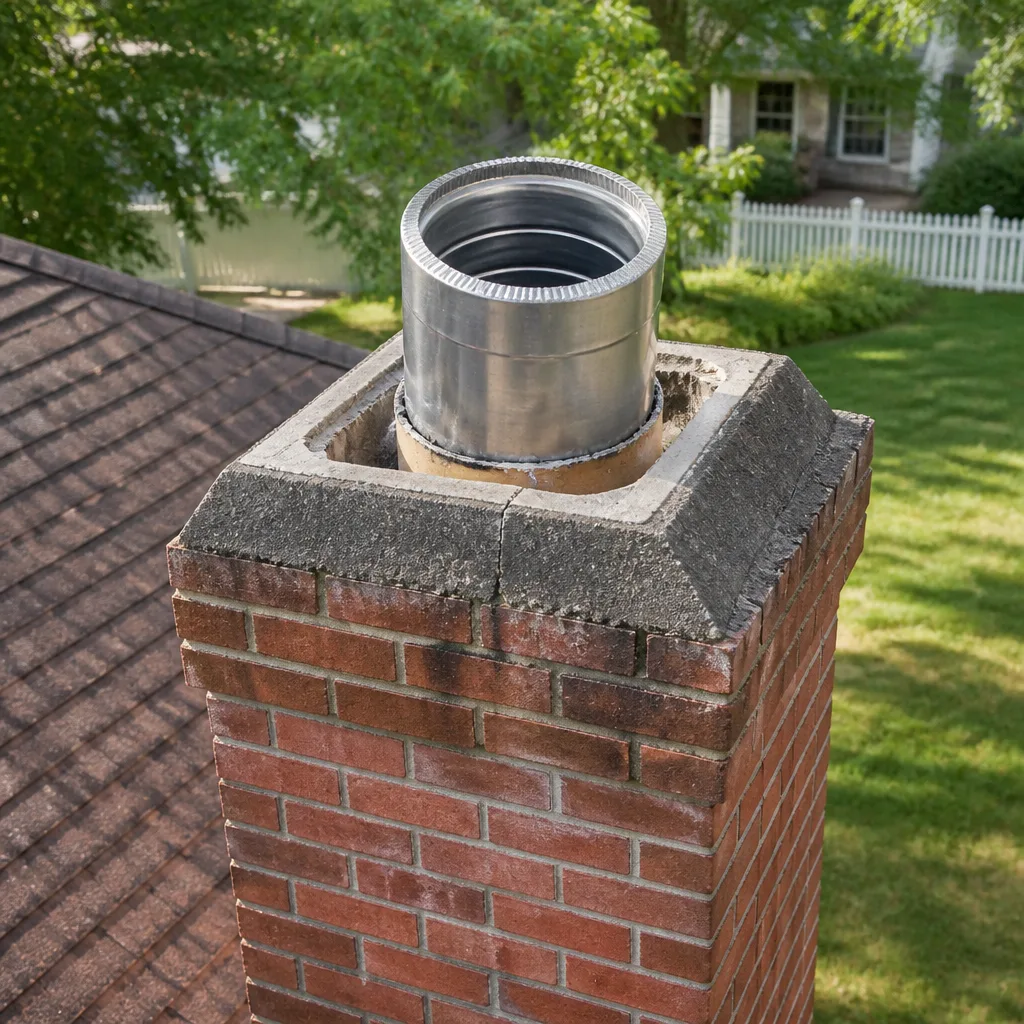 Flue relining
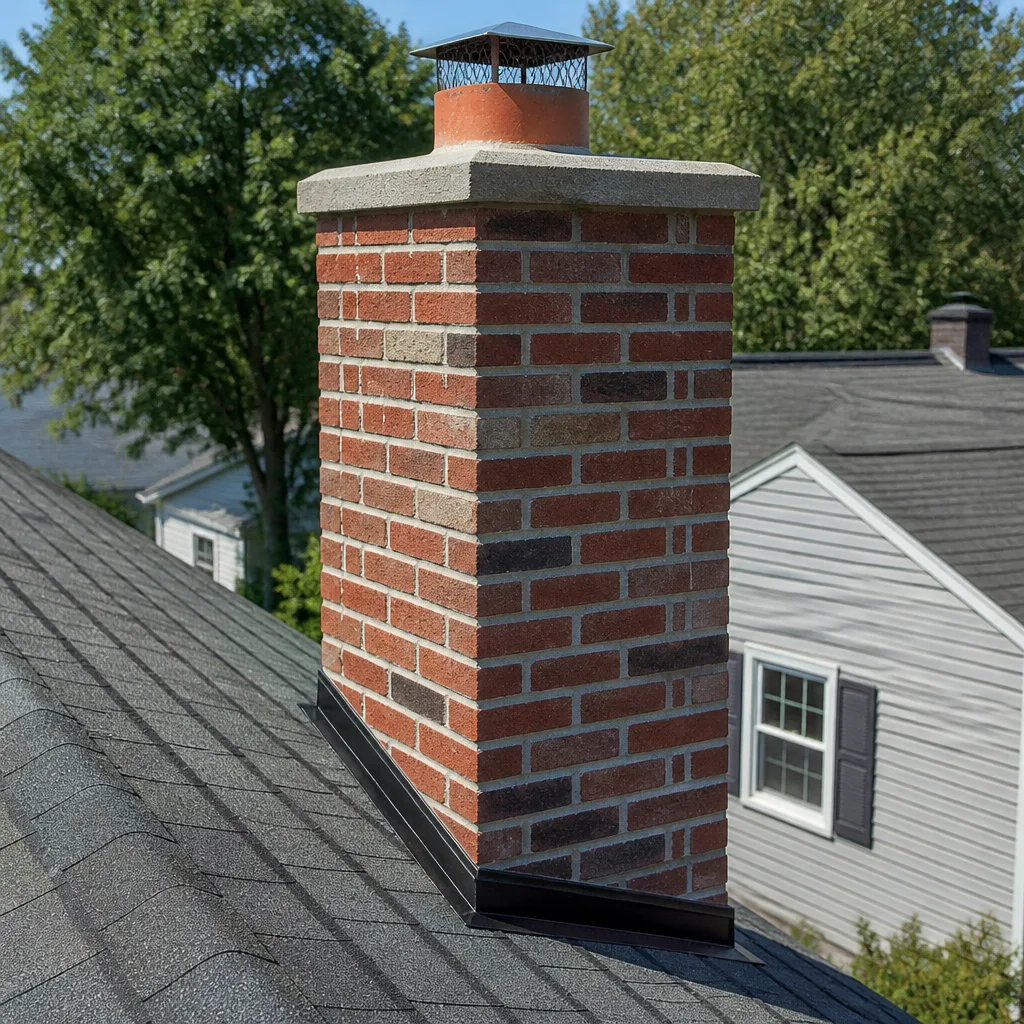 Masonry repair
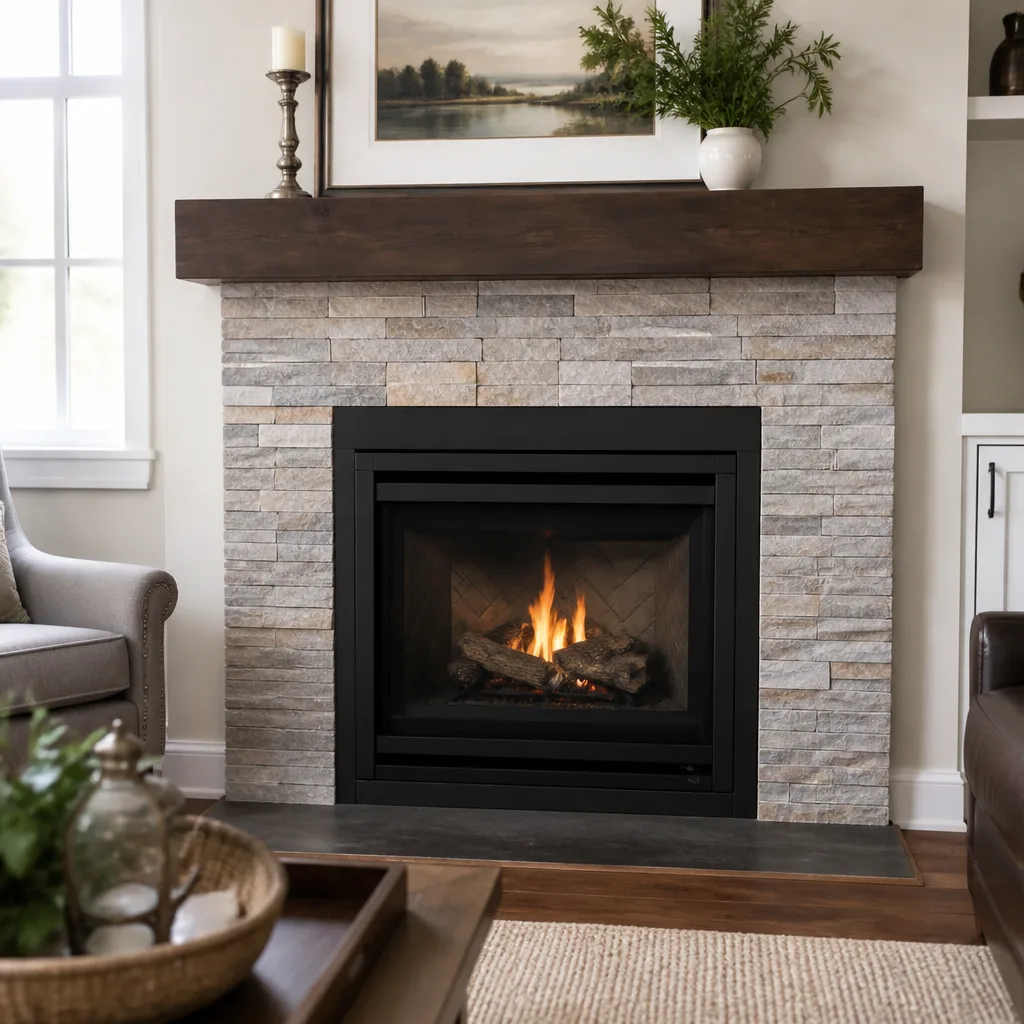 Gas fireplace service
Level 1 sweep and inspection to the NFPA 211 annual standard - flue, crown, cap, and flashing checked and photographed
Chimney sweep logs do not sweep chimneys. They loosen some creosote - which then falls where a brush and vacuum still have to collect it.
Chimney Cleaning Permits, Codes & Inspections in Canoga Park, CA: What You Need to Know
Most homeowners assume chimney cleaning is permit-free maintenance, and for a routine sweep that’s true. But the moment a sweep recommends a liner repair, an insert installation, or a crown rebuild, California and Los Angeles County codes kick in, and the contractor’s licensing requirements change entirely. That line between cleaning and construction work is where homeowners get hurt: unpermitted chimney work can void an insurance policy or stall a home sale. In this guide we walk through what actually needs a permit in Canoga Park, what Title 24 means for your fireplace damper, how to pull a home’s chimney permit history before you hire anyone, which contractor license covers what, and how South Coast air quality rules shape when you schedule your sweep.
Quick Answer
Routine chimney cleaning in Canoga Park does not require a permit. Structural chimney work – liner replacement, masonry repair, crown rebuilds, fireplace insert installations – does require a permit from the LA County building department, and the contractor performing it must hold a valid CSLB license appropriate to the work. Inspections fall in the middle: a visual or camera inspection alone is not permitted work, but any repair recommended from that inspection may be.
Styles & brands we work with
- Sweep & inspection
- Caps & crowns
- Flue relining
- Masonry repair
- Gas fireplace service
Table of Contents
- Cleaning vs. Construction: Where the Permit Line Actually Falls
- What LA County Building Code Requires for Chimney Work
- Title 24 and Your Fireplace Damper: When a Cleaning Triggers Compliance
- How to Pull a Home’s Chimney Permit History in Canoga Park
- CSLB License Classifications: Who Can Legally Do Chimney Work
- South Coast AQMD Burn Rules and How They Shape Your Schedule
- The Three Inspection Levels and What Each One Tells You
- A Step-by-Step Checklist Before You Hire Anyone
Cleaning vs. Construction: Where the Permit Line Actually Falls
A chimney sweep brushes creosote off flue walls. A chimney contractor alters the structure of the chimney. Both involve a chimney, both involve a technician on your roof, but only one is regulated as construction work. Understanding that split is the single most useful thing a Canoga Park homeowner can learn before picking up the phone.
Here is how the line breaks down in practice:
- No permit needed: routine sweeping, visual inspection, camera inspection, cap replacement with a same-size direct-fit model, minor firebox cleaning.
- Permit typically required: liner replacement, heat-shield resurfacing of deteriorated flue tiles, crown rebuilding or replacement, masonry tuckpointing on the chimney stack, fireplace insert installation, chimney removal or height changes.
- Gray area: flue liner resurfacing on an existing liner that has not been structurally compromised, minor cap and crown repairs, damper replacement.
The trap here is that a sweep who recommends work often wants to perform it in the same visit. If that work crosses into the permittable category, LA County requires the job to be permitted, inspected, and signed off. Unpermitted structural work on a Canoga Park chimney can be hard to spot from the ground, but it becomes visible to a home inspector, a title company, or an insurance adjuster quickly.
For sweeping itself, no permit is involved. A routine annual chimney sweep cleans the flue and leaves the structure intact. If you’re booking a sweep because you’re hearing a noise, smelling smoke backup, or noticing staining on the exterior masonry, the sweep should begin with an inspection, not a brush – and the inspection’s findings determine whether the job stays in the no-permit column or moves into the permittable column.
Canoga Park’s housing stock matters here. Many homes in the neighborhood date from mid-century construction, when flue tiles were laid with mortar joints that have since deteriorated. That means a Canoga Park homeowner is more likely than a newer-build homeowner to discover on the first inspection that the chimney needs work beyond cleaning – which is precisely why knowing the permit line before you call protects you.
What LA County Building Code Requires for Chimney Work
Los Angeles County adopts the California Building Code, which in turn adopts the California Residential Code and the California Mechanical Code. For chimneys, most of the relevant requirements trace back to the mechanical code’s venting rules and the residential code’s masonry chimney provisions, both of which defer to national standards. In Canoga Park, permits for chimney structural work are typically issued through the LA County Department of Public Works Building and Safety Division, and the specific requirements are the same across the county.
The essential rules a Canoga Park homeowner should understand:
- Any alteration to the flue liner, chimney structure, or firebox assembly requires a building permit, submitted with plans that describe the work.
- Crown replacement, flue liner replacement, and masonry rebuilds are treated as structural modifications and require inspection by a county building inspector before the job is signed off.
- Fireplace insert installations require a permit regardless of whether the insert is gas or wood-burning.
- A cap replacement that matches the existing flue diameter and chimney dimensions does not alter the structure and does not typically require a permit.
- Any change in chimney height, orientation, or clearance to combustibles does require a permit.
We recommend asking any contractor before you hire them: “Will this job require a permit, and are you pulling one?” A contractor who is licensed and doing permitted work will say yes without hesitation. A contractor who hesitates is telling you something useful.
The permit process is not designed to be punitive, and for most Canoga Park homeowners it isn’t expensive relative to the project total. What it does is create a paper trail. If the chimney is ever inspected during a sale, if insurance is evaluating a claim, or if a future contractor needs to know what’s already inside your flue, that record is the difference between “we know what’s going on in there” and “we don’t.”
Title 24 and Your Fireplace Damper: When a Cleaning Triggers Compliance
California’s Title 24 energy code requires that new and substantially altered fireplaces have gasketed doors and a gasketed combustion air inlet, or an alternative that limits infiltration. For existing fireplaces, a routine cleaning does not trigger Title 24 compliance. An alteration does. That distinction matters in Canoga Park because the code enforcement trigger is tied to the scope of the work, not to the sweep itself.
When a chimney service crosses into Title 24 territory:
- Insert installation. Any time a new fireplace insert is installed, the assembly must meet current Title 24 requirements for the enclosure and the combustion air path.
- Fireplace rebuild or major alteration. Rebuilding a firebox or significantly modifying the fireplace opening requires compliance with the current energy code.
- Damper replacement on an altered fireplace. If the fireplace is being modified for any reason, the new damper system typically must meet current code.
- Conversion from wood-burning to gas or pellet. Appliance swaps that change the fuel type are treated as alterations and require compliance.
A routine sweep does not trigger any of this. That’s the reassurance: if all your chimney needs is a cleaning, Title 24 does not enter the conversation. If your chimney needs structural work, Title 24 enters as part of the permit package and adds a small amount of cost and complexity to the project.
In Canoga Park homes built before the current Title 24 cycle, the existing fireplace damper is often a simple throat damper without a gasket. That is not a code violation on an untouched fireplace. It only becomes one when the fireplace is being altered. We mention it because some sweep companies use Title 24 to upsell damper replacements that aren’t required – a Canoga Park homeowner who knows the trigger rule can ask the right question: “Is the damper being replaced because it’s broken, or because the fireplace is being altered?” If the answer is neither, the damper does not need to go.
How to Pull a Home’s Chimney Permit History in Canoga Park
Before you hire anyone for chimney work on a Canoga Park home – especially a home you recently bought – pull the permit history. It takes about fifteen minutes online and it will tell you more about your chimney than any single inspection can.
- Go to the LA County Department of Public Works Building and Safety portal. Search by property address. The portal shows every permit pulled on the property going back decades, including chimney and fireplace permits.
- Search for permit types: “chimney,” “fireplace,” “masonry,” “flue,” and “liner.” These are the categories where chimney work usually falls.
- Look at the status of each permit. “Finaled” or “closed” means the work was inspected and signed off. “Open,” “expired,” or “issued but not finaled” means the workflow was interrupted, and the county has no record that it was completed or passed inspection.
- Cross-check the year of any liner installation against what the seller disclosed. If a liner was installed in a specific year and no permit exists, ask who installed it and get documentation.
- Note any open permits in a written summary. If you find an open permit, contact the county to ask about closure. Some can be closed with an inspection; some require the original contractor to finish; some require re-permitting.
The county portal is public record. You don’t need to be the property owner to search it. If you’re in escrow on a Canoga Park home and the seller or their agent has told you “the chimney was recently updated,” the portal is your verification step.
We do this routinely as part of an inspection when a homeowner asks. It’s also a step a home inspector will perform on a purchase, so getting ahead of it is worth the effort before you list or buy.
CSLB License Classifications: Who Can Legally Do Chimney Work
The California State License Board issues a range of contractor licenses, and chimney work falls across several of them depending on what’s being done. A Canoga Park homeowner hiring for chimney work should understand which license is appropriate for the job at hand.
- B – General Building Contractor. The broadest license. Permits structural work on buildings, including chimney structural repair and rebuilds, provided the contractor either holds the appropriate specialty trades or subcontracts them to licensed specialty contractors.
- C-29 – Masonry Contractor. Covers chimney masonry, crown rebuilds, tuckpointing, and other masonry-specific work. Often the right license for structural chimney repairs that are masonry-driven.
- C-36 – Plumbing Contractor. Not typically the right license for chimney work, though plumbing contractors sometimes work on venting systems for gas appliances.
- C-61 – Limited Specialty. A catch-all classification that can include chimney cleaning and some chimney-adjacent services. The license details matter here: not every C-61 is scoped for chimney repair, so ask to see the specific classification description on record.
- Handyman exemption. California allows an unlicensed person to perform work under a small dollar threshold (currently $500 in combined labor and materials), but that exemption does not apply to work that requires a permit, and it does not apply to any structural work on a chimney.
The practical upshot: for routine chimney cleaning, the CSLB license classification matters less than insurance, training, and inspection capability. For structural chimney repair, a B or C-29 license is what you want to see, and the contractor should be pulling the permit in their own name.
Ask for the CSLB license number and look it up on the CSLB website before you sign anything. This takes about thirty seconds and it will confirm the classification, the license status, and whether there are any disciplinary actions on record. Any contractor in Canoga Park who can’t produce a license number for a structural chimney job is not the contractor you want.
Insurance is the second check. A licensed chimney contractor should be able to provide a certificate of general liability insurance and, if they have employees, workers’ compensation. Both matter if something goes wrong on your roof.
South Coast AQMD Burn Rules and How They Shape Your Schedule
Canoga Park sits in the South Coast Air Quality Management District (AQMD), the air district that oversees most of Los Angeles, Orange, Riverside, and San Bernardino counties. The AQMD’s Rule 445 governs wood-burning appliances and places restrictions on when you can burn, but it also affects your chimney maintenance schedule.
The AQMD issues no-burn days, typically during the cooler months when particulate pollution accumulates in the basin. On a no-burn day, wood-burning in a fireplace or wood stove is prohibited unless the appliance is EPA-certified and registered for the exemption. The AQMD also requires that registered wood-burning devices be maintained and that they burn efficiently.
What this means for a Canoga Park homeowner:
- Schedule your annual sweep before the burning season starts, not in the middle of it. Sweeping in late summer or early fall gets the chimney ready for the first cold night, rather than leaving you unable to burn on the first no-burn-allowed evening.
- Keep a record of your inspection findings. If a future AQMD rule or a home inspection asks about appliance maintenance history, the inspection report answers it.
- If you’re burning a non-EPA-certified fireplace, know that your burning days are limited by AQMD rules. A sweep that documents your appliance type and venting configuration is a useful piece of paper when regulations shift.
- If you’re considering an insert or a fireplace upgrade, ask your contractor whether the appliance you’re considering is EPA-certified – it opens more burning days under AQMD rules.
None of this is a reason to skip the chimney sweep. It’s a reason to schedule it at the right time of year, and to keep the paperwork.
The Three Inspection Levels and What Each One Tells You
The chimney industry uses a three-level inspection framework that maps to what you have access to and what you’re trying to find out. In Canoga Park, most routine inspections are a Level 1; a Level 2 is what you want before a home purchase, after an event, or before a repair; and a Level 3 is rare and usually reserved for concealed problems. The framework follows the NFPA 211 standard for chimneys, fireplaces, vents, and solid fuel-burning appliances.
Level 1 Inspection
A Level 1 inspection is a visual check of the readily accessible portions of the chimney, including the firebox, damper, flue interior as far as you can see from the firebox or the top, and the exterior chimney from the ground and roof. It is performed during a routine annual sweep, and it is what you get when the chimney is in continued service with no changes. A Level 1 inspection confirms that the chimney is clear, that there is no visible obstruction, and that the visible components are intact.
Level 2 Inspection
A Level 2 inspection includes everything from a Level 1 plus a camera inspection of the flue interior, a check of accessible attic and crawl space areas, and a review of the chimney’s connection to the appliance and the surrounding combustibles. It is the inspection you want before a home purchase, after an operating malfunction like a chimney fire or a sudden smoke backup, after an earthquake or a major weather event, or before any structural chimney repair. The camera is what makes Level 2 valuable: it reaches the portions of the flue that a visual check can’t see, and it produces photo evidence a homeowner can review.
Level 3 Inspection
A Level 3 inspection is a Level 2 plus the removal of parts of the chimney or adjacent construction to access concealed areas. If the flue has a hidden deterioration that a camera can’t reach, or if a Level 2 reveals conditions that need to be seen directly, a Level 3 is the next step. In Canoga Park, a Level 3 usually comes up on older masonry chimneys that have had prior unpermitted work.
The takeaway: a Level 1 inspection is what your annual sweep should include, a Level 2 is what you want before you buy, and a Level 3 is what you rarely want but are glad exists when a Level 2 reveals something concealed.
Asking your technician which inspection level they’re performing is a reasonable question and a good way to confirm you’re getting the right service for the situation. A camera inspection and photo report should be included in a Level 2, and you should be able to see every photo before any repair is recommended.
A Step-by-Step Checklist Before You Hire Anyone
Before you hire a chimney contractor in Canoga Park, work through this list. Each step is quick and each one has saved a homeowner from a bad decision.
- Pull the property permit history. Use the LA County portal to check for chimney permits and whether they were finaled.
- Confirm the CSLB license. Verify the license number on the CSLB website and check the classification matches the work.
- Ask for a certificate of insurance. General liability is the minimum. Workers’ comp is standard for a company with employees.
- Ask which inspection level the company performs. A sweep should do a Level 1 as part of a routine cleaning. A contractor evaluating a repair should do a Level 2 with camera.
- Ask whether the recommended job requires a permit. Structural work does. A contractor who pulls permits will say so without hesitation.
- Ask to see the camera inspection photos before any recommendation. This is not an unreasonable request, and a professional will have them ready.
- Get the written estimate before work begins. The estimate should describe the scope, whether a permit is included, and the total price. The written estimate sets the final price.
- Ask what happens if the job is bigger than expected. A good answer includes a pause, an updated scope, and a new written estimate before proceeding.
If any step can’t be completed, that’s information. A contractor who can’t produce a license number for structural work, or who won’t include permit costs in the estimate, is telling you something about how they’ll handle the rest of the job.
Common Mistakes to Avoid
- Hiring a sweep who performs structural work without a permit. Unpermitted liner or crown work leaves no county record and becomes a problem at the next inspection, sale, or insurance claim. A sweep who says “no permit needed” for structural work is wrong, or worse.
- Skipping the permit history on a Canoga Park home before purchase. A recent chimney “upgrade” with no paper trail is a red flag. Fifteen minutes on the county portal before closing is worth more than any verbal assurance from the seller.
- Accepting a liner recommendation without seeing the camera footage. A Level 2 inspection includes camera evidence. If the technician won’t show you the photos, don’t authorize the work.
- Assuming a handyman can handle chimney repairs. The CSLB handyman exemption caps unlicensed work at $500 and explicitly excludes any job that requires a permit. Chimney structural work requires a permit, so the handyman exemption does not apply.
- Scheduling the annual sweep in the middle of burning season. AQMD no-burn days already limit when you can burn; getting the sweep done before the season starts means your chimney is ready on the first burn-allowed night.
- Treating a cleaning as a substitute for an inspection. A brush cleans the flue; an inspection finds the problems. If your chimney hasn’t been inspected in years, book the inspection with the sweep.
- Ignoring exterior chimney staining or a cracked crown. Both point to water intrusion that will get worse, and both often trigger a permittable repair that’s cheaper to do sooner than later.
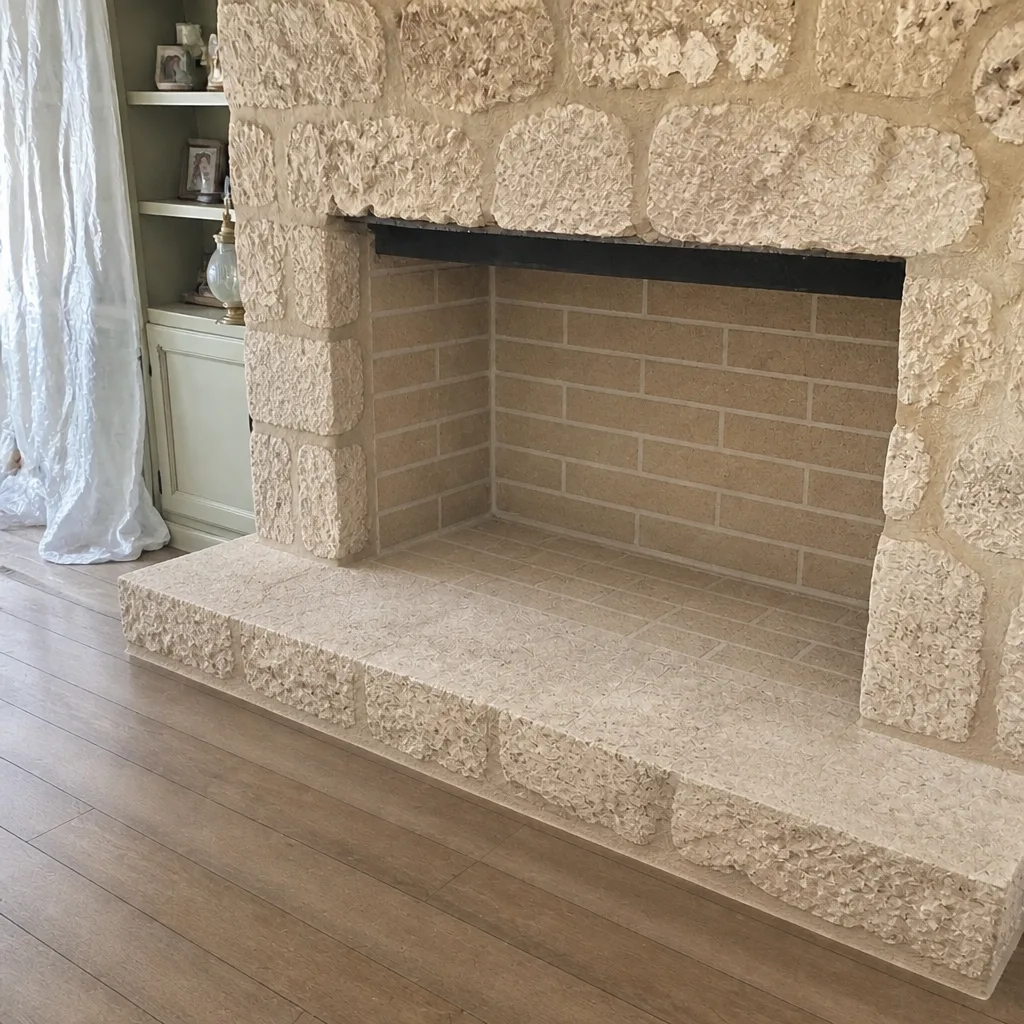
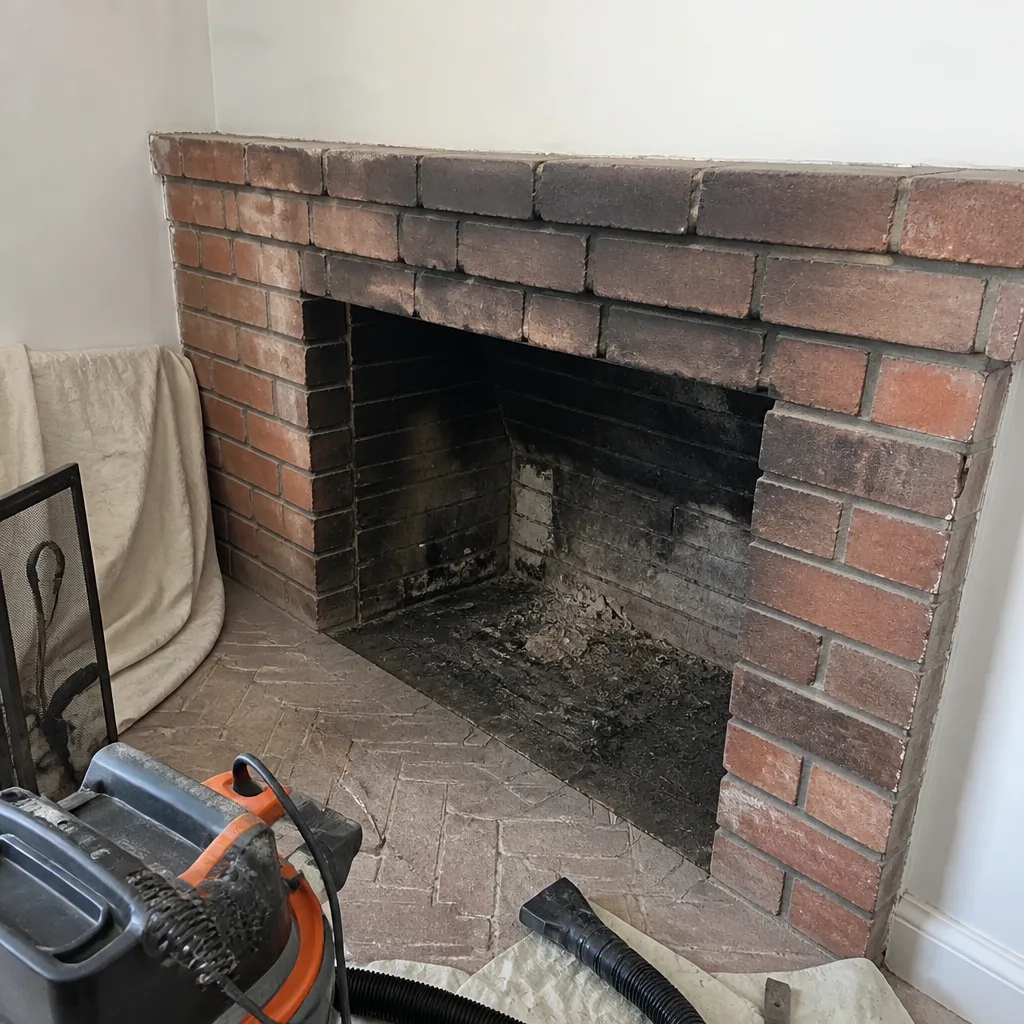
See the difference
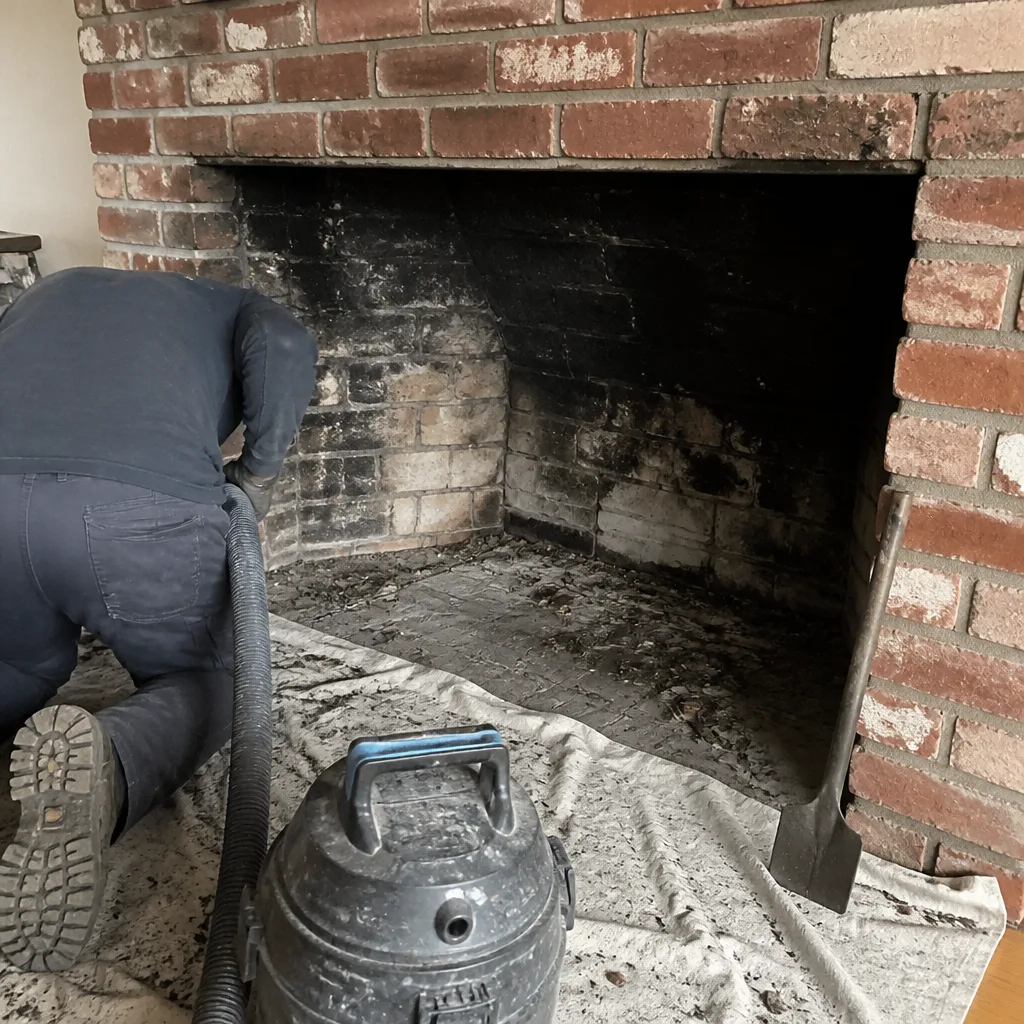 Before
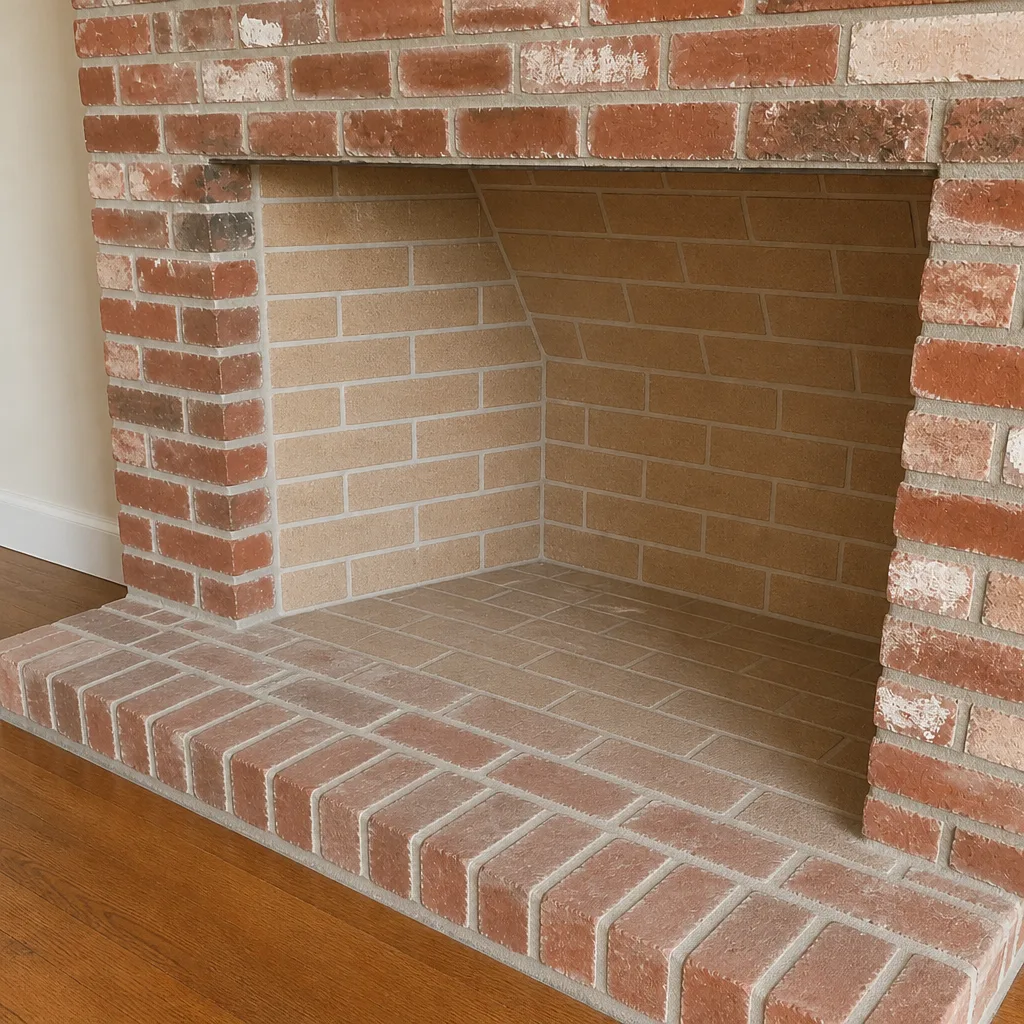 After
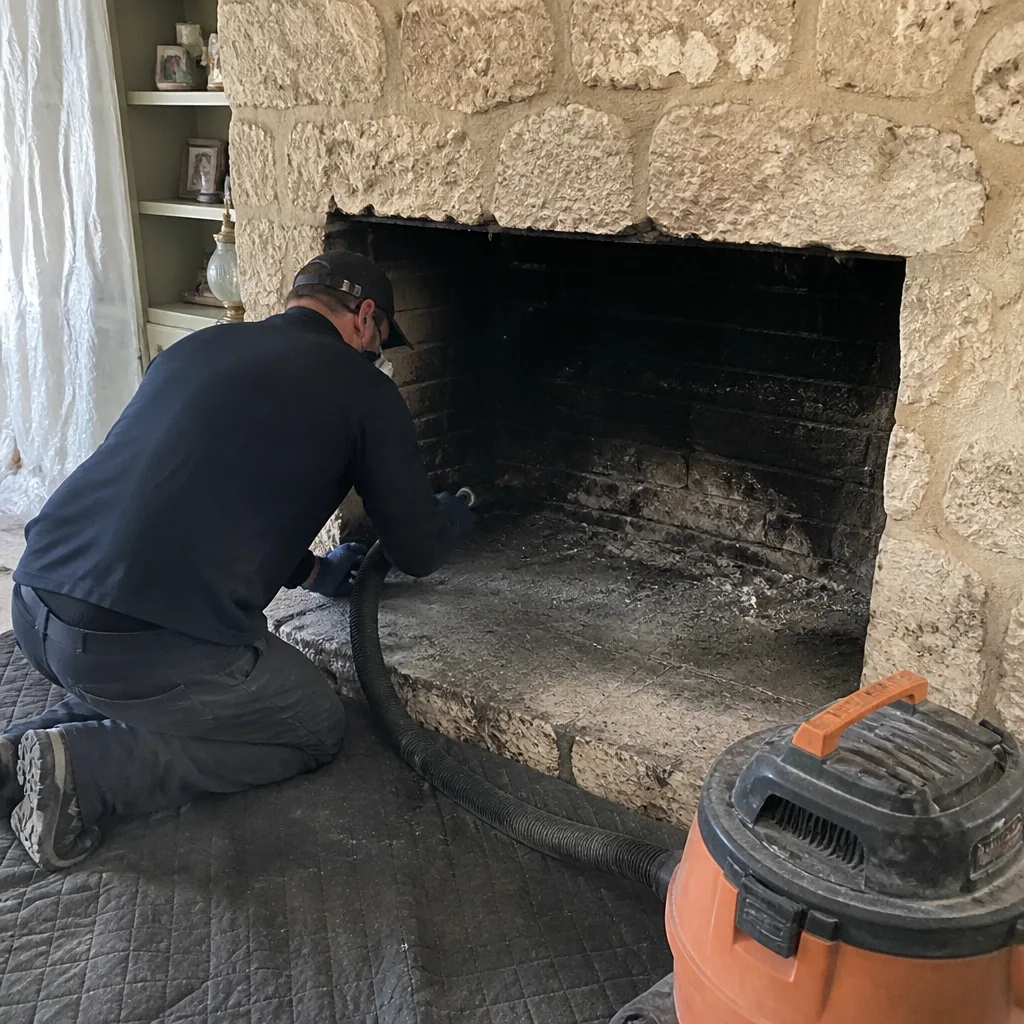 Before
 After
 Before
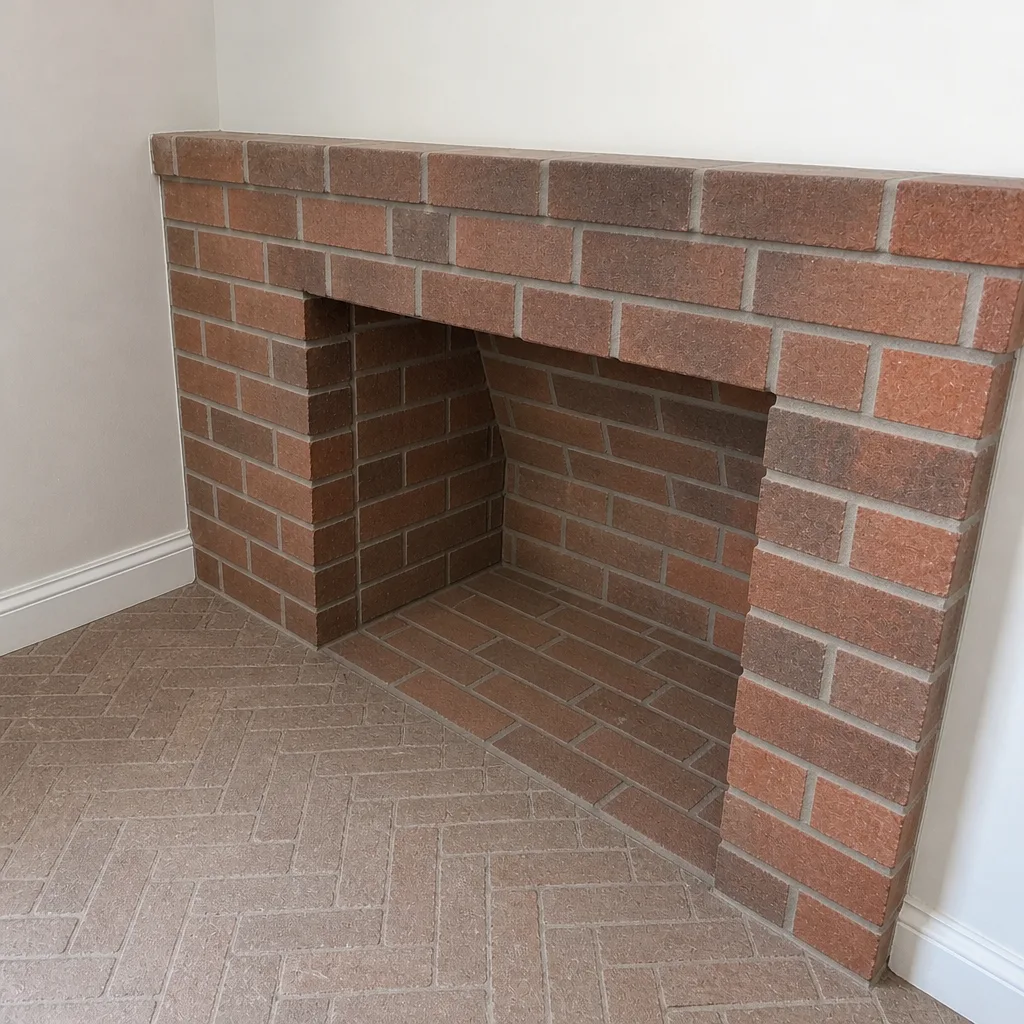 After
When to Call a Professional
Call a professional when you smell smoke backup in the house, when you hear a roar or rumble from the flue during a fire, when you see staining on the exterior chimney or the ceiling near the fireplace, when you’re buying or selling a home and need a Level 2 inspection with camera, or when any contractor has told you a structural repair is needed without showing you the evidence. Call for the annual sweep before burning season too, so the chimney is clean and inspected before the first cold night. Chimney Sweep Canoga Park offers free estimates in Canoga Park. Call (844) 443-4582. We answer 24/7. Fast dispatch from 7am to 7pm, Sunday through Friday.
Frequently Asked Questions
No. Routine chimney cleaning does not require a permit in Canoga Park or anywhere in Los Angeles County. A permit is only required when the work involves structural changes, liner replacement, crown work, or fireplace insert installation. Call (844) 443-4582 for an exact quote on a cleaning or inspection – estimates are free.
Yes. Liner replacement is treated as structural work on the chimney and requires a building permit from the LA County Department of Public Works Building and Safety Division, plus inspection by a county building inspector before the job is signed off. A contractor who says otherwise is not doing permitted work.
Search the LA County Building and Safety public portal by property address and look for permits filed under “chimney,” “fireplace,” “masonry,” “flue,” or “liner.” Each result shows the permit status. If a permit shows as “open,” “expired,” or “issued but not finaled,” that work was never inspected and signed off. Call (844) 443-4582 if you need help interpreting what you find.
For structural chimney repair and rebuilds, a B (General Building Contractor) or C-29 (Masonry Contractor) license is appropriate. For routine cleaning, the CSLB classification matters less than insurance and the technician’s inspection training. The California handyman exemption does not apply to permit-required work.
Yes, indirectly. South Coast AQMD no-burn days already limit when you can burn, so scheduling your annual sweep before burning season means the chimney is ready on the earliest burn-allowed night. Sweeping during the season can leave you unable to burn on the nights you’d want to.
Only if the recommended work is an alteration to the fireplace, such as insert installation or a rebuild. A routine sweep or inspection does not trigger Title 24. If a sweep recommends a damper replacement on a fireplace that isn’t being otherwise altered, ask whether the existing damper is actually broken before authorizing the work.
The Bottom Line
Chimney cleaning in Canoga Park is permit-free maintenance, and that’s true both for the routine annual sweep and for the visual inspection that should accompany it. What changes everything is the moment a repair is recommended: structural work on a chimney requires a permit from LA County, requires a contractor holding the right CSLB license, and may trigger Title 24 energy compliance if the fireplace itself is being altered. Before you hire anyone for chimney work, pull the permit history on the property, verify the license on the CSLB website, ask which inspection level they perform, and ask to see the camera photos before you authorize any recommendation. A chimney contractor who says yes to all four is a chimney contractor worth hiring.
From the firebox to the cap, we handle the full picture: Chimney Sweep Canoga Park handles chimney cap & crown work, fireplace repair, liner work with DuraFlex and HeatShield systems, and the professional-grade components you need from Gelco, Olympia Chimney, Famco, and Copperfield. Our technicians have up to 15 years of experience, and we inspect before we sweep so you know what we found before anything gets recommended. Call (844) 443-4582 for a free estimate. We answer 24/7. Fast dispatch from 7am to 7pm, Sunday through Friday.
Written by the team at Chimney Sweep Canoga Park.