
Top Signs You Need Chimney Cleaning Service – Don’t Ignore These
Most homeowners assume a chimney that drafts well and shows no visible smoke is clean. That’s the mistake we see most often in Canoga Park: the conditions that demand professional attention rarely announce themselves. Stage-2 creosote is essentially odorless until it ignites, and a fireplace that lights harder each season is telling you something before any smoke backs up. If you’d rather not climb a roof to guess, call (844) 443-4582.
Why the Obvious Signs Aren’t the Ones That Matter
Every chimney guide online tells you to watch for smoke rolling into the room or a black creosote stain. Those are real, but by the time they appear, the problem has usually been developing for several heating seasons. The conditions worth catching early in Canoga Park are quieter: a flue coating you can’t see from the firebox, a slow moisture intrusion at the crown, an animal nest packed below the smoke shelf. None of that trips a smoke alarm or makes a sound.
We inspect before we sweep, and the reason is simple. A brush pushed through a flue without a camera inspection tells you almost nothing about what the walls actually hold. What we look for is the thickness of the deposit, the condition of the flue tiles, and whether water has been getting in. Our technicians have up to 15 years of experience reading those signals, and the ones below are the ones homeowners most often talk themselves out of.
Consider the seasonal pattern particular to Southern California. A fireplace here might run a dozen evenings across a mild winter and sit cold the rest of the year. That light use creates a false sense of security. A flue that only carried a few fires still collects soot, still gathers debris, and still gives birds and squirrels months of quiet to build. Infrequent use is not the same as clean use.
Creosote Stages: What’s Actually on Your Flue Wall
Creosote builds in three recognizable stages, and the middle one is where a homeowner’s brush stops being useful. Knowing the difference matters because the fix changes completely at each stage.
- Stage 1: A thin, flaky, soot-like coating that brushes off easily. This is normal accumulation after a season of burning and the standard target of a routine chimney sweep.
- Stage 2: A thicker, crumbly or tar-like layer that clings to the flue tiles. It doesn’t brush away cleanly, and scraping at it with a hand brush can break tiles loose. This is the threshold where DIY cleaning stops working.
- Stage 3: A hard, glazed, glassy deposit baked onto the flue wall. It requires specialized removal, and a flue in this condition has usually lost tile integrity.
Stage 2 is the one that catches people. It’s essentially odorless, it doesn’t discolor the firebox, and the fireplace still draws fine. It simply sits there as concentrated fuel. When we find stage-2 creosote in a Canoga Park home, the conversation shifts from sweeping to whether the flue tiles can be restored with HeatShield resurfacing or whether the flue needs a new liner. That decision comes from camera evidence, not from a guess.
Signs Homeowners Miss Inside the House
Some of the clearest indicators are things you notice at the hearth, not on the roof. They’re easy to dismiss as quirks of an old fireplace. Used alone, any one of them is worth a look.
- Your fireplace is harder to light than it used to be. A fire that once caught quickly now needs extra kindling or a longer preheat. Restricted airflow from a blocked or coated flue is a common cause.
- The damper feels warm when the fireplace is cold. That shouldn’t happen. Warmth there can mean heat is traveling where it shouldn’t.
- You smell smoke in the house with no fire burning. This isn’t a draft issue to shrug off. A smoke smell without an active fire points to negative pressure, a blockage in the flue, or a damaged smoke chamber allowing air to move the wrong direction.
- Soot falls into the firebox when you open the damper. Loose deposits above are shedding, and the flue likely hasn’t been cleaned in some time.
- Your glass doors soot over faster than they used to. Incomplete combustion or a restricted flue often leaves that film behind.
None of these mean your house is in immediate danger. They mean the chimney is asking for a look. A cleaning visit that turns into a chimney inspection is a normal chain of events, not a sales tactic.
What the Outside of the Chimney Is Telling You
Walk outside and look up. The exterior of a Canoga Park chimney records water damage in ways a firebox never shows, and the pattern of the damage tells you what kind of visit you need.
- White efflorescence staining on the brick. That chalky white bloom is mineral salt pushed to the surface by moisture moving through the masonry. It’s a water-infiltration signal, and water in a flue accelerates tile deterioration.
- Spalling brick. Faces flaking or popping off mean the brick has absorbed water and is breaking down. Cleaning alone won’t fix it.
- Mortar gaps at the crown. The crown is the concrete cap on top that sheds water away from the chimney. Cracks and gaps there let water straight into the flue below.
- Rust staining around the cap. That means the cap or its fasteners are failing, and water is getting behind them.
When we see any of these, the visit includes a Level 2 inspection rather than a simple sweep, because the question is no longer just “how much creosote is up there” but “how much water has already gotten in.” We work with caps and crowns from Gelco, Famco, and Copperfield so the replacement fits the actual flue diameter and roofline instead of whatever is on the shelf.
What a Thorough Cleaning Visit Actually Involves
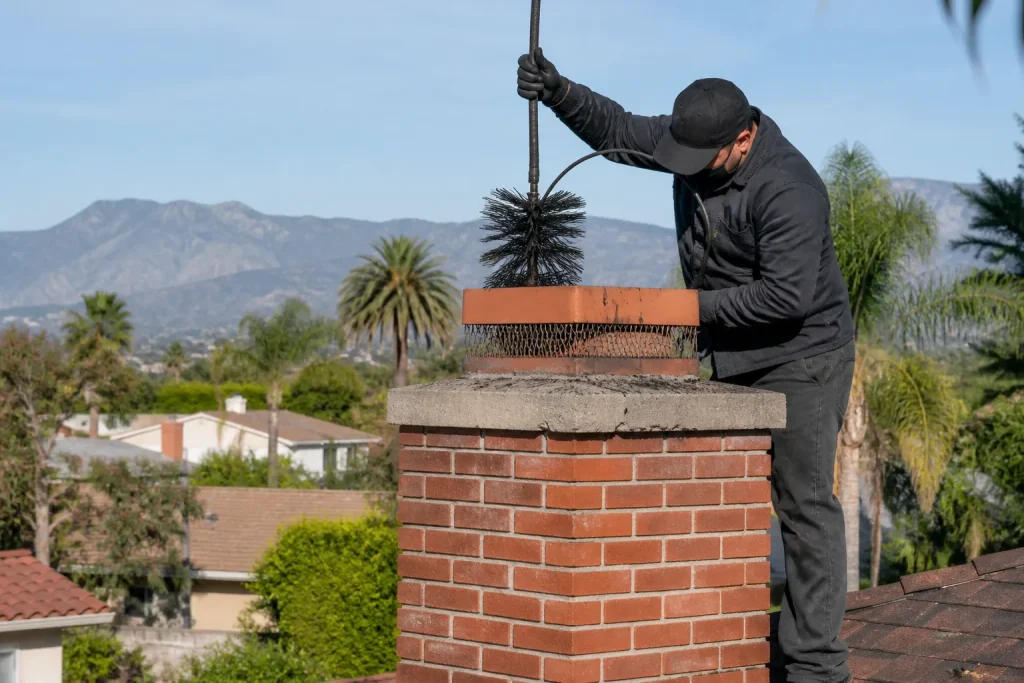
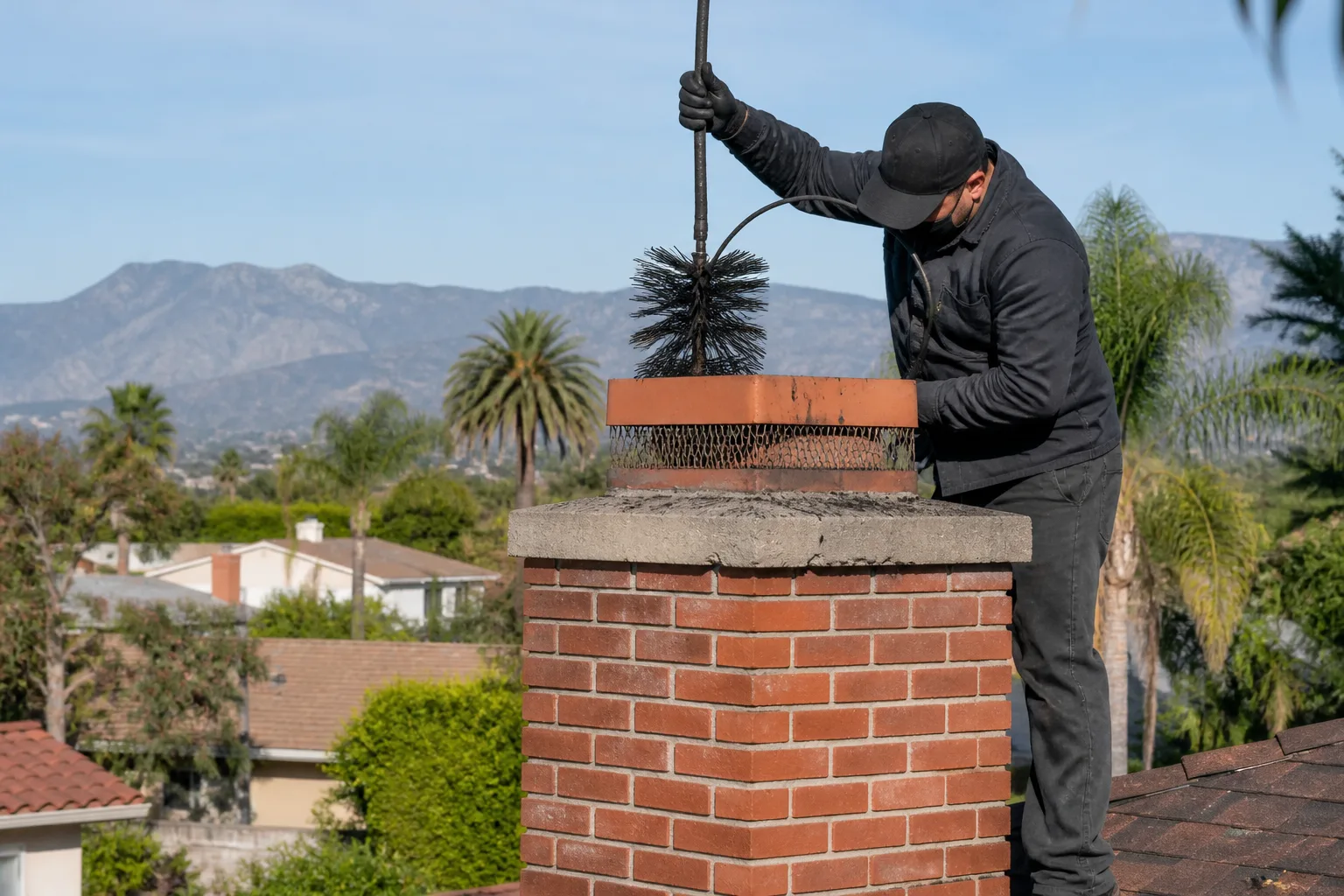
A proper cleaning is not a quick brush-and-go. Here’s the sequence we run for a Canoga Park home, and it’s the reason we say a chimney sweep and a chimney specialist aren’t the same thing.
- Inspection first. We look before we sweep, checking the firebox, damper, smoke chamber, and flue. A camera lets us see the flue walls and document conditions with photos.
- Containment and sweep. Drop cloths and a sealed work area keep soot out of your living room while the flue is brushed.
- Assessment of what we found. Stage-1 deposits get swept. Stage-2 or stage-3 deposits get explained, with the camera footage shown to you so you can see it yourself.
- Recommendations only where the evidence points. If the flue tiles are sound, we say so and the visit ends there. If they’re deteriorated, we can talk through HeatShield resurfacing or a DuraFlex flexible liner for offset and older flue configurations that rigid systems can’t handle.
Nothing gets recommended without camera evidence you can see for yourself, and we’ll tell you plainly when work can safely wait until next season. Our parts come through Olympia Chimney Supply so the components meet professional specification rather than whatever’s cheapest.
When to Call a Pro
Call us if you’re seeing creosote you can’t identify the stage of, if a damper or smoke smell has you second-guessing, if the exterior brick shows efflorescence or spalling, or if you’ve just bought a Canoga Park home and don’t know when the flue was last cleaned. Those are the cases where a camera inspection settles the question. We’ll also tell you when it can wait.
The Bottom Line
The signs worth acting on in Canoga Park are the quiet ones: a fire that’s harder to light, a warm damper, a smoke smell with no fire, white staining on the brick. Stage-2 creosote doesn’t announce itself, and light seasonal use doesn’t protect a flue from debris or moisture. If any of these sound familiar, get an inspection before the next burning season. Our technicians have up to 15 years of experience and we work with the professional-grade brands that hold up over time. If you’re in Canoga Park and need help, Chimney Sweep Canoga Park offers free estimates – call (844) 443-4582. We answer 24/7. Fast dispatch from 7am to 7pm, Sunday through Friday.
Related services in Canoga Park: Chimney Sweep Canoga Park, chimney cap & crown, and fireplace repair.
Frequently Asked Questions
Once a year for a home that burns regularly, and an annual inspection even if you only light a handful of fires. Light use still allows soot, debris, and animal nesting to build. Call (844) 443-4582 for an exact quote – estimates are free.
No. Stage-2 creosote clings to flue tiles and doesn’t brush away cleanly, and scraping at it by hand can damage the tiles or leave dangerous deposits behind. It needs professional removal followed by a camera check of the flue. Call (844) 443-4582 for an exact quote – estimates are free.
It points to negative pressure, a flue blockage, or a damaged smoke chamber pushing air the wrong way. It’s not a draft quirk to ignore; it’s a reason to book an inspection. Call (844) 443-4582 for an exact quote – estimates are free.
Pricing is set per job by a written estimate once we’ve seen the flue, and the estimate is free. Costs vary with how much deposit is present and whether the visit includes a Level 2 inspection. Call (844) 443-4582 for an exact quote – estimates are free.
Written by the team at Chimney Sweep Canoga Park.
Need Chimney Cleaning Help?
Call Chimney Sweep Canoga Park - the local pro we connect you with is licensed and insured, here with fast help in Canoga Park.
(844) 443-4582